01 // Case study
Keeb Hero
Isometric anatomy of a 75% mechanical keyboard that comes apart layer by layer as you scroll and plays real switch sounds as you type on your own keyboard, plus an interactive keyswitch figure that reads a real force curve.
- Role
- Design & front-end, solo
- Year
- 2026
- Stack
- React · SVG · Web Audio · TypeScript
01 //
The brief
Most keyboard product pages show one glossy render and a spec table. The goal here was a hero that explains what a 75% mechanical keyboard is actually made of (six layers, eighty-four switches) and lets you feel the difference between switch types, all within the first scroll.
02 //
Approach
The first version was a full Three.js build: a Blender model generated from a Python script, 84 individually pressable keycaps, a single-writer animation system and an anime.js intro. It worked, but a glossy render explained less than a good drawing would.
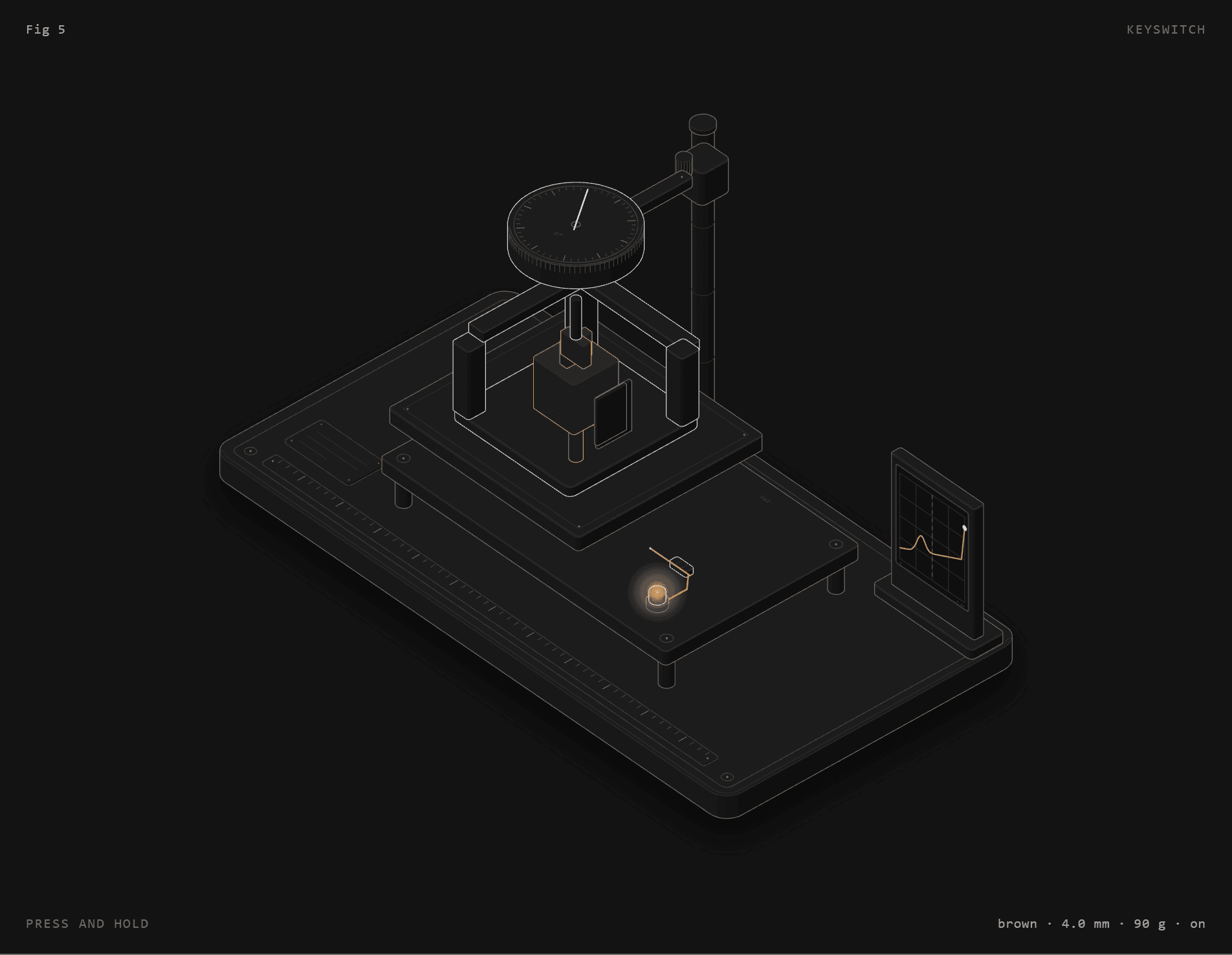
So the shipped version redraws the board as isometric technical figures with the Anatomy iso kit. Fig 1 is the whole board coming apart layer by layer as you scroll; Fig 5 is one switch on a force bench, cut open so you can watch it work.
03 //
Craft details
One value drives the explode
Fig 1 is six SVG groups. A single value (0 = assembled, 1 = apart) slides each layer up its own axis, so nothing is re-projected per frame.
Measured, not eyeballed
Layout and layer heights come from the same Blender script as the 3D model: 1 unit = 1 mm, 18.75 mm key pitch.
Your keyboard plays it
Every KeyboardEvent.code maps to a key in the drawing, so typing on your own keyboard presses the keys on screen.
Synthesised switch sounds
No samples. Each hit is built in Web Audio from the part that makes the noise: a damped-sine thock for the bottom-out, a tactile tick for brown, and a click-jacket snap on the way down and up for blue.
One force model
Fig 5 reads everything from forceAt(stem, mm): 30 g preload plus 7.5 g/mm, a bump for brown and blue, and a hard stop past 3.8 mm. Stem, spring, dial, contact leaf, LED and chart all follow the same number.
Lessons from the 3D build
Merging the switches cut draw calls from 540 to about 190 per frame, and Draco compressed the model from 753 KB to 180 KB.
04 //
Result
Live on GitHub Pages. Pick Blue, Red or Brown and the force curve, the stems and the sound all change together; scroll and the board comes apart, then goes back together before the page ends.